
Lines On the River (Ottawa River)
Gender roles in 1920s Canada
Examine societal norms and activities.
In Canadian communities during the 1920s, societal norms significantly influenced the roles men and women played in public and recreational life. Gender segregation was a common feature of social activities, with distinct expectations for male and female participation. Local news reporting often reflected and reinforced these prevailing understandings of gender.
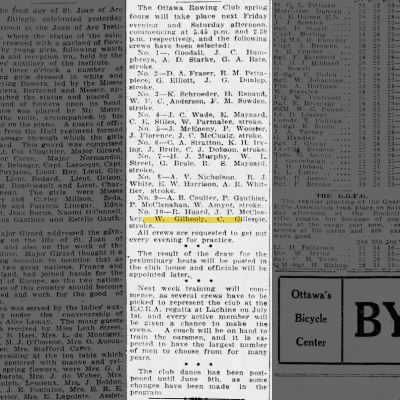
Competitive sports, particularly those requiring physical exertion and public display of athletic prowess, were largely male-dominated. The Ottawa Rowing Club, for instance, featured prominently in local newspapers, with detailed reports on its male crews, training schedules, and competitive events. Articles meticulously listed the names of male team members selected for races, highlighting their athletic endeavors and the club's focus on developing "oarsmen." This extensive coverage underscored the societal view of competitive sports as a masculine domain.1
In contrast, female participation in public events was frequently directed toward social, ceremonial, or auxiliary roles. A newspaper clipping from 1923, for example, mentions "girls dressed in white" participating in a St. Joan of Arc celebration and refers to a "ladies' aux." These roles often involved supporting male-led organizations, performing decorative functions in parades or ceremonies, or contributing through social committees. Such mentions illustrate how women’s public presence was often framed within contexts that emphasized grace, support, or community-building in ways distinct from male competitive pursuits.2
Local newspapers, by detailing these separate spheres of activity, inadvertently contributed to the prevailing understanding of gender in society. They chronicled a world where men were highlighted for their athletic achievements and competitive spirit, while women were recognized for their involvement in social and ceremonial functions, reflecting the era's gendered expectations for community engagement.
Footnotes:
- "The Ottawa Citizen," May 28, 1923.
- "The Ottawa Citizen," May 28, 1923.
Comments